RIGHTME
返回列表

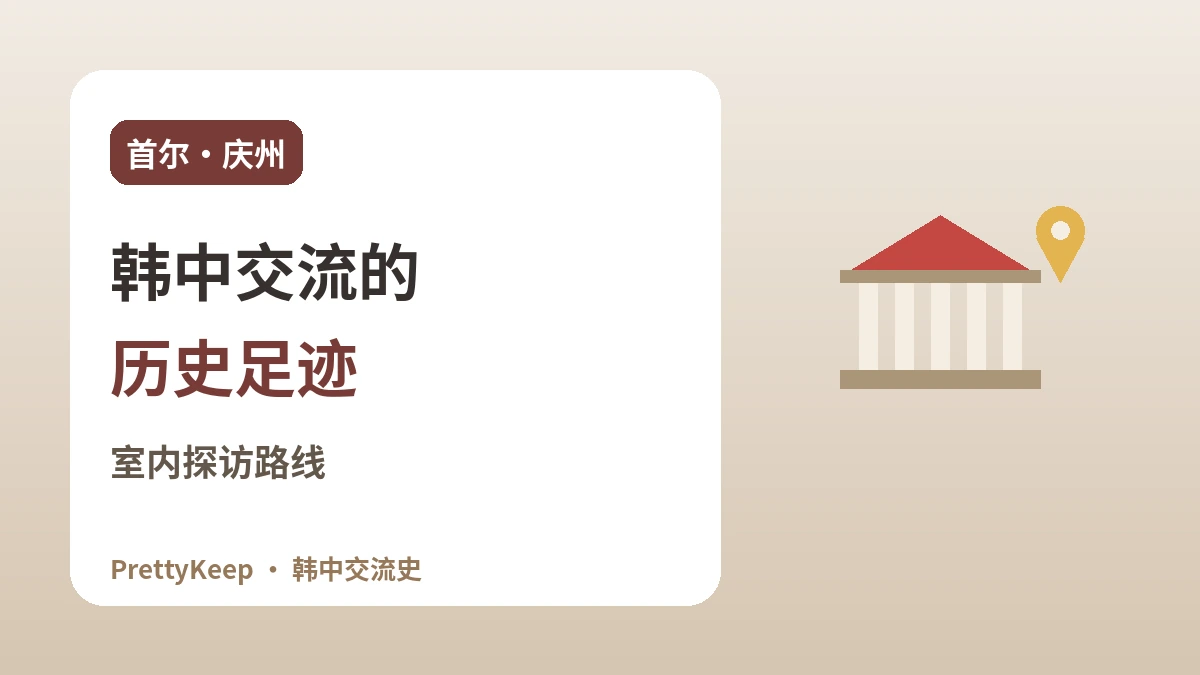
Traces of Korea–China Exchange to Meet in Seoul and Gyeongju — An Indoor-Centered Walking Course

发布日期 2026.07.14
Traces of Korea–China Exchange to Meet in Seoul and Gyeongju — An Indoor-Centered Walking Course 1

(A comprehensive Korea–China exchange-history walking guide for Chinese visitors to Korea)

[Document type] Korea–China exchange-history guide / downtown, indoor-centered, low-intensity walking course

────────────────────────────────────
Introduction
────────────────────────────────────

If you want to follow the long bond of Korea and China all at once, there is no better stage than Seoul
and Gyeongju. The maritime exchange of Silla and Tang, the ceramic culture of Goryeo and Song, the
envoy visits of Joseon and Ming–Qing, the modern anti-colonial solidarity — the traces of the time the
two nations walked together are held intact in the museums and sites of these two cities. Without
wandering far, you can meet over a thousand years of exchange history comfortably through downtown
indoor exhibits alone.

This guide is a comprehensive course that weaves the several exchange stories introduced earlier
(Provisional Government, Silla wards & Jang Bogo, Goryeo celadon, Buddhist exchange, and more) into a
single walking route. We composed it indoor-centered and low-intensity, so that Chinese visitors can
tour Korea–China exchange history without strain yet richly. It suits a recovery-period schedule before
or after procedures and checkups well.

Museums and downtown sites are mostly indoors with good access, so they are little affected by weather
or condition. Sit and rest at ease, and savor the story of the two nations.

────────────────────────────────────
Understanding the Korea–China exchange-history walk
────────────────────────────────────

1) Why Seoul and Gyeongju
Seoul has exhibits that span a general history, such as the National Museum of Korea, while Gyeongju
concentrates Silla's international-exchange heritage. With these two cities you can see the great flow
of exchange history.

2) What you can see
From maritime exchange (Silla–Tang), ceramic exchange (Goryeo–Song), and envoy and goods exchange
(Joseon) to modern solidarity (Provisional Government), you meet the traces of exchange by era.

3) How to tour
① Start with indoor exhibits ② Add outdoor sites according to your condition ③ With a view of
exchange and friendship, not superiority.

Key point: Seoul and Gyeongju are "two classrooms that link Korea–China exchange history at a glance."
You can meet a thousand years of story comfortably, indoor-centered.

────────────────────────────────────
Traces of Korea–China exchange walk TOP10
────────────────────────────────────


No.1
National Museum of Korea (Seoul)
Meaning General exhibits spanning Korea–China exchange from prehistory to modern times
Point Celadon, Buddhist art, and trade goods in one place
For Visitors who want to see exchange history as a whole


No.2
Hyochang Park & Baekbeom Kim Ku Memorial (Seoul)
Meaning The memory of the Provisional Government and modern anti-colonial solidarity (linked to EP021)
Point The Shanghai Provisional Government story, at home
For Those interested in modern history


No.3
Maeheon Yun Bong-gil Memorial (Seoul)
Meaning The Hongkou action and a symbol of Korea–China cooperation (linked to EP021)
Point Easy to understand via indoor exhibits
For Those interested in the history of solidarity


No.4
Gyeongju National Museum (Gyeongju)
Meaning A space concentrating Silla's international-exchange heritage
Point Traces of goods that went to and from Tang and the Western Regions
For Those interested in ancient exchange history


No.5
Gyeongju — traces of the Silla international city
Meaning Silla's Seorabeol, a center of East Asian exchange of the era
Point A walk feeling Silla as an international city
For Those interested in ancient urban history


No.6
Goryeo Celadon Hall — ceramic exchange (Seoul)
Meaning A fruit of Goryeo–Song ceramic exchange (linked to EP024)
Point The beauty of jade-green and inlaid celadon
For Lovers of crafts and art


No.7
Buddhist Sculpture Hall — Buddhist exchange (Seoul)
Meaning Silla Buddha statues and Korea–China Buddhist exchange (linked to EP027)
Point Buddhist art met indoors
For Those interested in Buddhist culture


No.8
Traditional-medicine exhibits (Seoul)
Meaning Donguibogam and Korea–China medical exchange (linked to EP028)
Point An exhibit that links the wisdom of healing
For Those interested in medical history and wellness


No.9
Insadong — calligraphy culture street (Seoul)
Meaning Humanities exchange of the Sinographic sphere (linked to EP026)
Point A stroll that links brush and tea culture
For Those who want a humanities experience


No.10
A half-day or full-day indoor walking course
Meaning A comprehensive low-intensity route centered on museums
Point Comfortable viewing light even in recovery
For Post-procedure visitors


────────────────────────────────────
Details — how to tour
────────────────────────────────────

[Example Seoul one-day course]
In the morning, get an overview of Korea–China exchange by era through the Goryeo Celadon Hall, Buddhist
Sculpture Hall, and trade-goods exhibits at the National Museum of Korea (linked to EP024·EP027). In the
afternoon, meet the memory of modern anti-colonial solidarity at Hyochang Park's Baekbeom Kim Ku
Memorial and the Maeheon Yun Bong-gil Memorial (linked to EP021). Most are indoors and comfortable,
with ample seating.

[Example Gyeongju extension course]
If you have time in your schedule, move to Gyeongju and tour Silla's international-exchange heritage at
the Gyeongju National Museum. You can also understand the backdrop of maritime exchange that connects to
the Silla wards and Jang Bogo (linked to EP023).

[Why it is especially meaningful for Chinese visitors]
In a single walk, you meet the time the two nations shared as a whole — Silla–Tang, Goryeo–Song, and
modern anti-colonial solidarity. Chinese cities and figures appear throughout, so there is great
pleasure in discovering points of contact with one's own history.

[An attitude of respect]
This course does not dispute superiority or attribution. Focusing on the facts of exchange and
friendship shared as long neighbors, we guide with a gaze that respects both nations.

[Connecting with a medical-tourism schedule]
Being museum-centered indoor, flat, seated viewing, it is especially suited to recovery. The Seoul
downtown course is enough in a half-day, and Gyeongju is good to add when you have time.

Notes for medical tourists (most important)
- Above all, follow your clinic's recovery guidance (period, precautions) for every itinerary.
- After a procedure, center on Seoul downtown indoor exhibits and avoid UV and long-distance travel.
- Plan long-distance travel such as Gyeongju after checking your condition and your clinic's guidance.
- If you feel dizziness, pain, or other abnormal symptoms, stop at once and contact your clinic.

────────────────────────────────────
Frequently asked questions (FAQ)
────────────────────────────────────

Q1. Can I see it all in one day?
A. The Seoul downtown course is enough in a half-day to a day. Adding Gyeongju, we recommend an
overnight itinerary.

Q2. Can I see it indoor-centered only?
A. Yes. Indoor exhibits alone, such as the National Museum of Korea, let you understand a thousand years
of exchange history fully.

Q3. How does it connect to the earlier themes?
A. This course weaves together the Provisional Government (EP021), Jang Bogo (EP023), Goryeo celadon
(EP024), calligraphy (EP026), Buddhism (EP027), Donguibogam (EP028), and more into a single route.

Q4. Is Chinese-language guidance available?
A. Major museums and memorials provide multilingual guidance and materials. PrettyKeep helps with routes
and interpretation.

Q5. Can I do it after a procedure?
A. The Seoul downtown indoor course places little burden even in recovery. For long distance (Gyeongju),
check your clinic's guidance first.

Q6. How do I check admission fees and opening days?
A. They differ by institution, so check the latest information before your visit. PrettyKeep helps
coordinate the schedule.

────────────────────────────────────
Medical-tourism tips
────────────────────────────────────

1. Follow your clinic's recovery guidance above all for every itinerary.
2. First compose a half-day course centered on Seoul downtown indoor exhibits.
3. Add long distance such as Gyeongju after checking your condition and clinic guidance.
4. After a procedure, avoid UV and long-distance travel; take frequent seated rests.
5. If your condition declines, stop viewing at once and contact your clinic.

────────────────────────────────────
About PrettyKeep
────────────────────────────────────

PrettyKeep is a Korea travel and medical-tourism guide platform for foreign visitors.

- We curate indoor-centered, low-intensity comprehensive walking courses on Korea–China exchange history
(every itinerary reflects the clinic's recovery guidance above all)
- Route design that minimizes travel near the clinic, with interpretation support
- One-stop courses weaving several exchange-history themes (Provisional Government, Jang Bogo, celadon,
Buddhism, medicine) into one
- Long-distance alternatives, symptom response, and clinic connection

A day to link a thousand years of Korea–China exchange at once in Seoul and Gyeongju — comfortably, with
PrettyKeep.

────────────────────────────────────

更多帖子