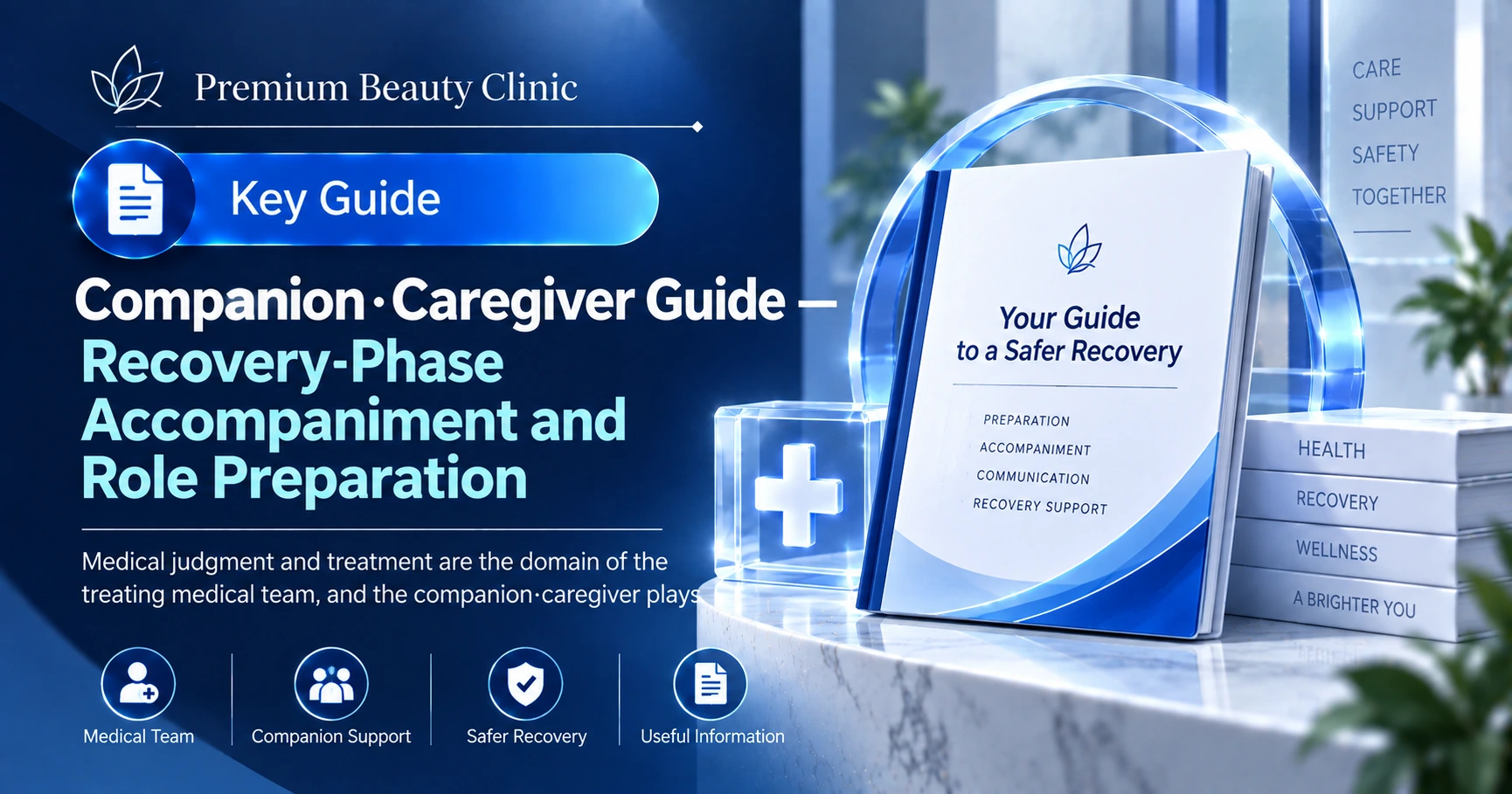
(Guidance for companions accompanying foreign visitors receiving aesthetic medicine in Korea)
[Document type] Information guide for foreign patients / General information on the role of companions·caregivers, recovery-phase support, accommodation, and schedule during aesthetic medicine visits
* This content is reference material summarizing general information as of July 2026 and does not replace medical diagnosis, claims of treatment efficacy, or individual medical advice. Medical judgment and treatment are the domain of the treating medical team, and the companion·caregiver plays a supporting role in support and communication. If warning signs occur, do not self-diagnose but contact the treating clinic·a local medical institution. Effects·results vary by individual and are not guaranteed, and personal information·documents must be handled carefully.
────────────────────────────────────
Introduction
────────────────────────────────────
For a visitor receiving aesthetic medicine, having a companion or caregiver along is a great help during the recovery phase. However, the companion's role is not a medical act but to help with support and communication. Knowing in advance what to prepare, how to support, and in what situations to contact the clinic makes both parties much more reassured.
This guide summarizes general information about the companion·caregiver role — recovery-phase accompaniment support, roles, accommodation·schedule preparation, and responding to warning signs. However, what is written here is only general reference material.
The most important principle is just one: medical judgment and treatment are the domain of the treating medical team, and the companion plays a supporting role in support and communication. If warning signs occur, do not self-diagnose but contact the treating clinic·a local medical institution. This article does not claim treatment efficacy and does not replace a diagnosis.
────────────────────────────────────
Basic principles for understanding accompaniment
────────────────────────────────────
When preparing for companion·accompaniment, it helps to consider the following together.
What to remember
- Medical judgment·treatment are the domain of the treating medical team, and the companion supports support·communication. This article is not a diagnosis.
- If warning signs (excessive swelling·fever·severe pain·bleeding, etc.) occur, do not self-diagnose but contact the treating clinic·a local medical institution.
- Handle the visitor's personal information·documents carefully and use a trustworthy official channel.
- Effects·results vary by individual and are not guaranteed, and recovery follows the treating medical team's guidance.
────────────────────────────────────
Companion roles (general information)
────────────────────────────────────
Below are roles that are generally helpful in recovery-phase accompaniment. Follow the clinic's guidance for specifics.
──────────
[Emotional support]
- Help the visitor focus on recovery with a calm mind by being beside them.
- Create a stable rest atmosphere rather than overloaded activity.
──────────
[Communication support]
- Help with communication if interpretation or translation is needed during consultation·guidance.
- Listening to the treating medical team's explanations together and taking notes helps with later confirmation.
──────────
[Schedule·transport support]
- Prepare the clinic-visit·revisit schedule and travel routes together.
- Coordinate a schedule that doesn't overexert, considering the recovery condition.
──────────
[Living support]
- Help the visitor with living matters such as accommodation·meals·transport.
- Prepare items·an environment needed during the recovery period in advance.
※ The above roles are general examples; medical treatment is the domain of the treating medical team. The companion does not perform any medical act.
────────────────────────────────────
Recovery-phase support preparation (general information)
────────────────────────────────────
- Understand and support the recovery·precautions guided by the treating clinic together.
- Organizing records such as medical history·medications·contacts together with the visitor helps.
- Confirm in advance the treating clinic·local medical institution information to contact when warning signs occur.
- Do not perform any treatment yourself; if necessary, contact the treating medical team.
────────────────────────────────────
Accommodation·schedule preparation (general information)
────────────────────────────────────
- Look into recovery-friendly accommodation (clinic accessibility·convenience, etc.) together with the visitor.
- Plan the stay realistically, considering the recovery period and revisit schedule.
- Coordinate travel not to overexert, considering the recovery condition.
- Check the clinic's guidance and official information for detailed accommodation·schedule information.
────────────────────────────────────
Warning signs and response (general information)
────────────────────────────────────
Below are signs generally mentioned as cautionary. This is not a diagnosis; if applicable, do not self-treat but contact the treating clinic·a local medical institution as a rule.
- Excessive or suddenly worsening swelling·pain
- Systemic symptoms such as fever or chills
- Bleeding, pus, or severe redness at the procedure site
- Sudden changes different from expected or persistent discomfort
→ If there are signs like the above, the companion should also not self-diagnose but contact the treating clinic and also a nearby local medical institution. If an emergency is suspected, use the local emergency medical system first.
────────────────────────────────────
Approach for comfortable accompaniment
────────────────────────────────────
- Understand that the companion's role is support and communication assistance, and medical judgment·treatment are the domain of the treating medical team.
- During the recovery phase, prioritize stable rest over an overloaded schedule.
- If warning signs occur, do not self-diagnose but contact the clinic.
- Handle personal information·documents carefully, and confirm hard-to-understand parts through translation.
────────────────────────────────────
Key principles of companion preparation TOP10
────────────────────────────────────
No. 1
Medical judgment = medical team
Medical judgment·treatment = treating medical team; companion supports support·communication.
No. 2
Warning signs to the clinic
For warning signs, do not self-diagnose; contact the treating clinic·local medical institution.
No. 3
Emotional support
Support the visitor beside them so they focus calmly on recovery.
No. 4
Communication support
Help communication with interpretation·translation during consultation·guidance.
No. 5
Schedule·transport support
Prepare the visit·revisit schedule and travel routes together.
No. 6
Understand recovery guidance
Understand the treating clinic's recovery·precautions together.
No. 7
Organize records
Organize medical history·medications·contacts together.
No. 8
Accommodation·schedule realistically
Plan the stay realistically considering recovery·revisits.
No. 9
No self-treatment
Do not perform any treatment yourself; contact the medical team.
No. 10
Careful with personal info
Handle personal information·documents via trustworthy official channels.
────────────────────────────────────
Detailed explanation
────────────────────────────────────
[No. 1 · Medical judgment = medical team]
This is the most important principle of accompaniment preparation. Medical judgment and treatment regarding the procedure·recovery are the domain of the treating medical team, and the companion·caregiver plays a supporting role in support and communication. This article does not replace a diagnosis or treatment guideline.
[No. 2 · Warning signs to the clinic]
When there are warning signs such as excessive swelling·fever·severe pain·bleeding, the companion should also not self-diagnose but contact the treating clinic and also a nearby local medical institution. If an emergency is suspected, use the local emergency system first.
[No. 3 · Emotional support]
Help the visitor focus on recovery with a calm mind by being beside them. It is better to create a stable rest atmosphere rather than overloaded activity.
[No. 4 · Communication support]
Help with communication if interpretation or translation is needed during consultation·guidance. Listening to the treating medical team's explanations together and taking notes helps with later confirmation.
[No. 5 · Schedule·transport support]
Prepare the clinic-visit·revisit schedule and travel routes together. Coordinate a schedule that doesn't overexert, considering the recovery condition.
[No. 6 · Understand recovery guidance]
Understand and support the recovery·precautions guided by the treating clinic together with the visitor. Follow the clinic's guidance for the scope of activity.
[No. 7 · Organize records]
Organizing records such as medical history·medications·contacts together with the visitor helps during consultations or when warning signs occur.
[No. 8 · Accommodation·schedule realistically]
Plan the stay realistically considering recovery-friendly accommodation and the revisit schedule. A relaxed route is better than overloaded travel.
[No. 9 · No self-treatment]
Do not perform any treatment yourself; if necessary, contact the treating medical team. Internet information or this article is not a diagnosis.
[No. 10 · Careful with personal info]
Handle the visitor's personal information·health information·documents carefully and use a trustworthy official channel.
────────────────────────────────────
Frequently asked questions (FAQ)
────────────────────────────────────
Q1. What role does a companion play?
A. Emotional support, communication support, schedule·transport·living support, etc. However, medical judgment·treatment are the domain of the treating medical team, and the companion does not perform medical acts.
Q2. What do I do if warning signs appear during recovery?
A. Do not self-diagnose; contact the treating clinic and also a nearby local medical institution. If an emergency is suspected, use the local emergency system first. This article is not a diagnosis.
Q3. May the companion do recovery care?
A. You can understand and support the recovery·precautions guided by the treating clinic together, but medical treatment is the domain of the treating medical team. Do not self-treat.
Q4. What records should I prepare?
A. Medical history·medications·contacts, treating clinic·local medical institution information, etc. Organizing them together with the visitor helps during consultations or when warning signs occur.
Q5. How do I choose accommodation?
A. Look into recovery-friendly accommodation (clinic accessibility·convenience, etc.) together with the visitor, and check the clinic's guidance and official information for details.
Q6. How do I plan the schedule?
A. Plan a stay that doesn't overexert realistically, considering the recovery period and revisit schedule. Follow the clinic's guidance for the scope of activity.
Q7. If interpretation is needed, may the companion do it?
A. Everyday communication support is possible, but for important medical content it is better to confirm accurately through the treating medical team·a medical interpreter.
Q8. How do I handle personal information·documents?
A. Handle the visitor's personal information·health information·documents carefully and use a trustworthy official channel. Do not send them via channels of unclear origin.
Q9. May the companion handle payment or contracts?
A. As a rule, handle payment·contracts through the visitor themselves and the clinic's official process. Do not rush; confirm with the clinic's official contact.
Q10. What should I help with during recovery?
A. A stable rest environment, meal·transport support, schedule coordination, etc. Follow the treating clinic's guidance, and contact the clinic for warning signs.
Q11. May we travel·sightsee together?
A. The scope and timing of activity follow the treating clinic's guidance. During recovery, a relaxed route is better than an overloaded schedule.
Q12. What if an emergency is suspected?
A. If an emergency is suspected, use the local emergency medical system first, then also inform the treating clinic of the situation.
Q13. Can I judge based on online information alone?
A. Online information or this article is not a diagnosis. Decide on recovery·treatment in consultation with the treating medical team.
Q14. Are the principles the same for men and all visitors?
A. The accompaniment principles are the same regardless of gender. However, specific matters vary by individual condition·procedure, so the treating medical team's guidance takes priority.
Q15. How does Prettykeep help with accompaniment?
A. It helps with guiding accompaniment information, connecting interpretation·language support, supporting accommodation·schedule coordination, supporting communication with clinics, and organizing records·translation. However, medical judgment·treatment are the domain of the treating medical team, and Prettykeep does not replace them.
────────────────────────────────────
Medical tourism TIP
────────────────────────────────────
- Always base accompaniment on the premise that "medical judgment is the treating medical team's."
- If warning signs occur, do not self-diagnose; contact the clinic.
- Organize medical history·medications·contacts together with the visitor.
- Plan accommodation·schedule realistically considering recovery·revisits.
- Do not perform any treatment yourself.
- Handle personal information·documents via trustworthy official channels.
────────────────────────────────────
About Prettykeep
────────────────────────────────────
Prettykeep supports foreign visitors and their companions in preparing for the recovery phase as follows.
- Guiding companion·caregiver information
- Connecting interpretation·language support
- Supporting accommodation·schedule coordination
- Supporting communication with clinics·organizing records·translation
- Confirming language support
Prettykeep supports booking and communication and does not guarantee the effects or results of treatment/procedures. Medical judgment·treatment are the domain of the treating medical team, the companion supports support·communication, and this content does not replace a diagnosis.
────────────────────────────────────
Medical information and advertising notice
────────────────────────────────────
This content is reference material summarizing general information as of July 2026 and does not replace medical diagnosis, claims of treatment efficacy, or individual medical advice.
Medical judgment and treatment are the domain of the treating medical team, and the companion·caregiver plays a supporting role in support and communication. If warning signs occur, do not self-diagnose but contact the treating clinic·a local medical institution. Effects·results vary by individual and are not guaranteed, and personal information·documents must be handled carefully. If abnormal symptoms occur, please contact a medical institution immediately.
Written·compiled by Prettykeep editorial team
Information confirmation basis July 2026
Content type Information guide for foreign patients (companion·accompaniment)
────────────────────────────────────