(A Korea–China medical exchange-history & wellness guide for Chinese visitors to Korea)
[Document type] Korea–China exchange-history guide / traditional-medicine exchange and herbal-wellness experiences
────────────────────────────────────
Introduction
────────────────────────────────────
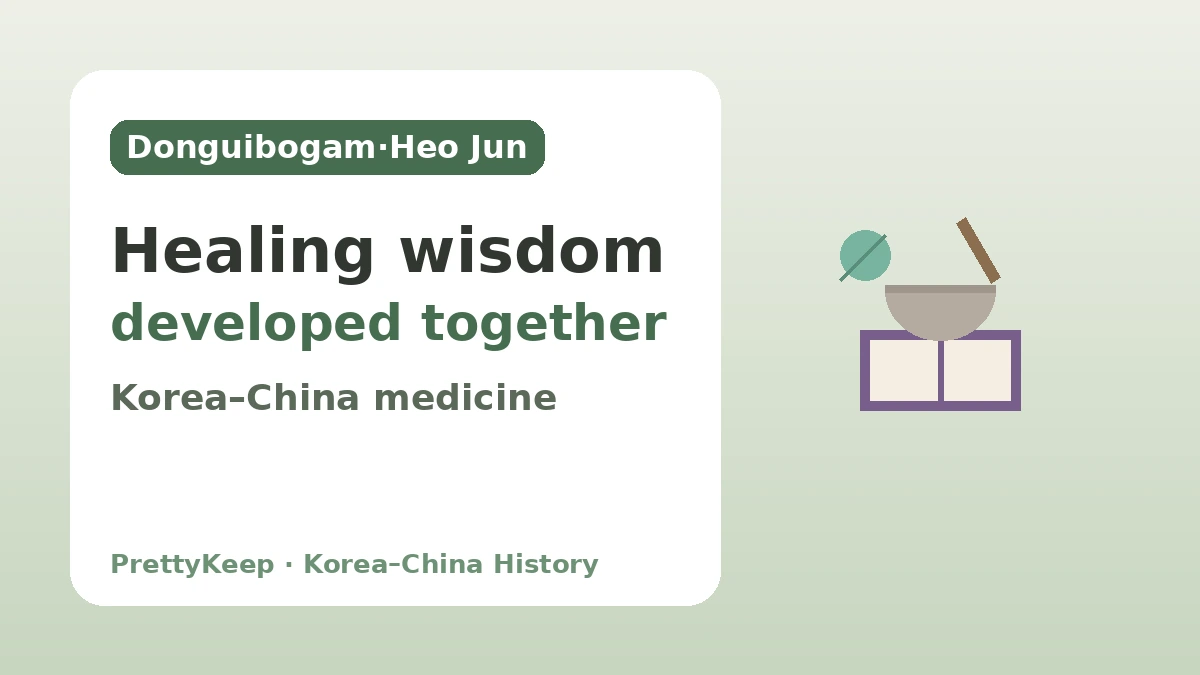
The wisdom of governing illness and nourishing the body is a precious heritage that Korea and China
built together over long ages. "Donguibogam" (Treasured Mirror of Eastern Medicine), completed by the
Joseon master physician Heo Jun, is a great work that broadly encompassed many Chinese medical texts and
compiled East Asian traditional medicine, and today it is inscribed on the UNESCO Memory of the World.
Sharing the same principles of materia medica (boncho) and meridians (gyeongrak), the two nations have
learned from and developed each other's medicine.
This guide introduces, from a Chinese visitor's perspective, the exchange of Korea–China traditional
medicine and its fruits. A visitor from China feels great gladness discovering how the familiar
tradition of herbology, acupuncture, and moxibustion was carried on and developed in Korea. Herbal
diagnosis, medicinal herbs, and wellness experiences also connect naturally with medical tourism, making
a journey that cares for both body and mind.
Korea has museums where you meet the history of traditional medicine and spaces that experience herbal
medicine in a modern way. Most are indoors and comfortable, and fit well with a recovery-period wellness
schedule.
────────────────────────────────────
Understanding Korea–China traditional-medicine exchange
────────────────────────────────────
1) What is shared
Korea–China traditional medicine shares basic principles such as materia medica (herbs), meridians,
and qi-blood. Over long ages, medical texts and knowledge went back and forth and developed together.
2) The meaning of Donguibogam
Compiled by Heo Jun from many medical texts, "Donguibogam" is a great work holding the essence of
East Asian traditional medicine. Its value is recognized as a UNESCO Memory of the World.
3) How we introduce it
① The shared wisdom first ② Respect for each nation's development ③ Introduce it as mutual learning,
not superiority.
Key point: Korea–China traditional medicine is "the wisdom of healing built up together." Donguibogam is
a great fruit that this exchange bore.
* Note: The following is a cultural and historical introduction; for your health condition and any
treatment, always consult a medical professional.
────────────────────────────────────
Korea–China traditional-medicine exchange & wellness experiences TOP10
────────────────────────────────────
No.1
The story of Donguibogam and Heo Jun
Meaning A great work compiling East Asian traditional medicine
Point A fruit of exchange that encompassed Chinese medical texts
For Visitors interested in medicine and history
No.2
Visiting the Korean Medicine Museum
Meaning An exhibit meeting the history of traditional medicine and medicinal herbs
Point Understanding herbal-medicine culture comfortably indoors
For Those who want a calm indoor visit
No.3
Seoul Yangnyeongsi — the scent of medicinal herbs
Meaning Korea's largest medicinal-herb street
Point A walk feeling the world of materia medica with all senses
For Those interested in herbs and aromas
No.4
Herbal diagnosis and constitution consultation
Meaning Examining the body's balance through traditional diagnosis
Point Tailored guidance through a professional consultation
For Those interested in health care
No.5
Materia medica and medicinal-tea experience
Meaning A healthy cup of tea brewed from herbs
Point Low-intensity wellness enjoyed seated
For Those who want a comfortable rest
No.6
Understanding the tradition of acupuncture and moxibustion
Meaning A tradition shared by Korea and China through meridian principles
Point Meeting the principles of healing through exhibits and explanations
For Those interested in traditional-medicine principles
No.7
Herbal spa and wellness care
Meaning Gentle relaxing care using medicinal herbs
Point Soft care suited to recovery
For Those who want to relax the body
No.8
Yaksun (medicinal cuisine) — a meal that suits the body
Meaning Healthy dining that uses medicinal herbs
Point Gentle yaksun, good even as a recovery meal
For Those who want a healthy meal
No.9
The history of Korea–China medical-text exchange
Meaning The world of texts through which medical knowledge went back and forth
Point Traces of knowledge exchange through books
For Those interested in texts and history
No.10
An indoor herbal-wellness course
Meaning An indoor route linking museum, medicinal tea, and gentle care
Point A low-intensity schedule light even in recovery
For Those who want a comfortable wellness experience
────────────────────────────────────
Details — how to enjoy
────────────────────────────────────
[Example wellness route]
After understanding the history of Donguibogam and traditional medicine at the Korean Medicine Museum,
walk feeling the scent of medicinal herbs at Seoul Yangnyeongsi. Then rest with a cup of medicinal tea
and relax the body with gentle herbal wellness care. The whole course is indoor and low-intensity,
comfortable even in recovery.
[Why it is especially meaningful for Chinese visitors]
The principles of herbology, acupuncture, moxibustion, and meridians share roots with Chinese
traditional medicine. For a visitor from China, there is great interest in comparing and understanding
how the familiar traditional medicine was carried on and developed in Korea.
[An attitude of respect]
Traditional-medicine exchange is not a matter of which nation is superior but wisdom developed together
by learning from each other. With a gaze of mutual respect, we introduce in balance that Donguibogam is
a fruit of exchange that encompassed many medical texts.
[Connecting with a medical-tourism schedule]
Herbal diagnosis, medicinal tea, and wellness care connect naturally with checkup and procedure
schedules. However, herbal treatment and taking medicinal herbs may interact with a procedure, so always
consult your treating hospital and medical staff first.
Notes for medical tourists (most important)
- Above all, follow your clinic's recovery guidance (period, precautions) for every itinerary and herbal
experience.
- Taking medicinal herbs or herbal treatment may interact with a procedure, so always consult medical
staff.
- After a procedure, center on indoor, seated wellness and avoid UV and long walking.
- Enjoy medicinal tea and yaksun carefully so they are not hot or irritating after oral procedures.
- If you feel dizziness, pain, or other abnormal symptoms, stop at once and contact your clinic.
────────────────────────────────────
Frequently asked questions (FAQ)
────────────────────────────────────
Q1. How is Donguibogam connected to Chinese medicine?
A. It is a great work in which Heo Jun broadly encompassed many Chinese medical texts and compiled East
Asian traditional medicine. A representative fruit of Korea–China medical exchange.
Q2. Is a traditional-medicine experience okay in recovery?
A. Static experiences such as museums and medicinal tea place little burden. But always consult medical
staff first for herbal treatment or herbs.
Q3. Can I take herbal medicine right after a procedure?
A. There may be interactions with a procedure. Always get confirmation from your treating hospital and
medical staff first.
Q4. What kind of place is Yangnyeongsi?
A. It is Korea's representative medicinal-herb street, a walking course to feel the scent of materia
medica and traditional-medicine culture with all senses.
Q5. Is Chinese-language guidance available?
A. Major museums and wellness spaces often provide multilingual guidance. PrettyKeep helps.
Q6. How intense is the wellness care?
A. We recommend gentle relaxation suited to recovery. Avoid strong care and prioritize your clinic's
guidance.
────────────────────────────────────
Medical-tourism tips
────────────────────────────────────
1. Follow your clinic's recovery guidance above all for every itinerary and herbal experience.
2. Always consult medical staff about medicinal herbs and herbal treatment due to interactions with
procedures.
3. Center on museum, medicinal tea, and gentle care at indoor, low intensity.
4. Enjoy medicinal tea and yaksun carefully so they are not hot or irritating after oral procedures.
5. If your condition declines, stop at once and contact your clinic.
────────────────────────────────────
About PrettyKeep
────────────────────────────────────
PrettyKeep is a Korea travel and medical-tourism guide platform for foreign visitors.
- We curate indoor-centered, low-intensity wellness courses on Korea–China traditional-medicine exchange
(every itinerary and herbal experience reflects the clinic's recovery guidance and medical-staff
consultation above all)
- Route design that minimizes travel near the clinic, with interpretation support
- One-stop courses weaving museum, medicinal tea, and gentle care together with recovery schedules
- Guidance on herbal-procedure interaction, symptom response, and clinic connection
A day to meet the wisdom of Korea–China healing built up together — comfortably, with PrettyKeep.
(This content is a cultural and historical introduction, not medical advice. For health matters, consult
a medical professional.)
────────────────────────────────────